Showing posts with label Week 13. Show all posts

Sunday, April 10, 2016

Week 13 Reading Reflection

1) The biggest surprise for me in the reading was probably the pricing formula. A lot more variables go into it than I had previously expected. I was able to understand the text but there was definitely some major differences from my expectations. 


2) The section about valuation methods was very confusing to me because I haven't really taken any high level finance or business classes yet so I am not very familiar with this concept. 

3) Ask the author two questions:
What is the main difference between adjusted tangible venture valuation and liquidation venture valuation?
Which of these two aproaches to venture valuation do you think is most effective?

4) As opposed to some other chapters, there was nothing I disagreed with the author on. I am slightly uninformed on the concepts in this chapter and it was also pretty straightforward so that is why I don't have any disagreements.


Celebrating Failure

1) Tell us about a time this past semester that you failed -- whether in this class, or outside of this class. Don't spare any details! It'd be even better if there was something you tried several times this semester, and failed each time. 
I have been pretty successful in this class overall but I definitely have to admit that I failed in completing my Interviewing Customers assignments. At first, for Interviewing Customers No. 1 I was a bit nervous about doing the video interviews so I decided not to do the assignment. After some feedback from classmates I gave it a shot for Interviewing Customers No. 2 and got a few constructive interviews but I was unable to submit my assignment on time. Interviewing Customers No. 3 involved a time conflict with a family issue. 

2) Tell us what you learned from it.  
I think it is important to be prepared for any assignments or assessments in a course like this and I did not look at Interviewing Customers No. 1 early enough to know that it was a time consuming assignment. Time management and not procrastinating are definitely things I learned from that assignment. It is important to look ahead at upcoming assignments so you know when you need to spend more time preparing or completing the assignment. Although I did not receive credit for any of the Interviewing Customers assignments, I was able to have more confidence in doing other video assignments such as the Elevator Pitch's and the Free Money assignment. I really enjoyed those video assignments so I hope they remain a part of the course. I also think it is important to note that I learned family conflicts can arise out of nowhere so it is good to be proactive and complete assignments ahead of time to give yourself more flexibility in submitting assignments on time.

3) Reflect, in general, on what you think about failure. Failure is hard, isn't it? It's embarrassing, sure, but it also means that we have to change something about ourselves. Talk about how you handle failure (emotionally, behaviorally). Finally, talk about how this class has changed your perspective on failure -- are you more likely to take a risk now than you were four months ago? 
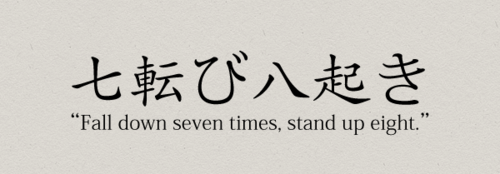
Failure is one of the hardest things to go through in life. But, I find it captivating how almost every successful person says that their success is attributed to all of the small failures along the way that they learned from and bounced back from. I love the proverb "Fall down seven times, stand up eight." This is how I try to handle my failures. I think it is so important to have this mentality in order to properly handle failure emotionally. This class has enhanced my prospective on failure because, although I may have failed at the Interviewing Customers assignments, I have worked hard to get my grade up and still have the opportunity to earn the A in the course. ENT3003 has also opened up my perspective a bit on taking risks. I feel like I am inherently hesitant to taking risks but taking this class and hearing some of Dr. Pryor's lectures and past students Elevator Pitch's has opened my eyes to the importance of taking measured risks in order to be successful.


Wednesday, April 6, 2016

My Exit Strategy

1) Identify the exit strategy you plan to make. Do you intend to sell your business in the next 5 years for a large return? Do you intend to stay with the business for several decades and retire? Do you intend to protect the venture as a family business, and pass it down to your children?
I do not have any plan to sell the business for large returns. It is a non-profit organization dedicated to helping people, not making profit. I do not see this business as a long term way for me to make a living but it is still something that I am very passionate about and will remain involved with for a very long time. I plan to pass on the UF chapter of BLUE to my peers in the coming years and I also plan to pass on the passion for service and travel to my children so that they can one day be involved with BLUE or a similar organization.

2) Why have you selected this particular exit strategy?
BLUE is not a financially stable long-term option as my main source of income. I am involved with BLUE because I enjoy it and will continue to for as long as I am able and well. I think it is important for me to pass on the BLUE at UF chapter to an upcoming group of Gators that will further the organization's association with UF. This is the part of my exit strategy that I will be most focused on in the next few years.

3) How do you think your exit strategy has influenced the other decisions you've made in your concept? For instance, has it influenced how you have identified an opportunity? Has it influenced your growth intentions or how you plan to acquire and use resources?
My exit strategy as an individual has not influenced the organization as a whole. We have many potential candidates who can fill my role once I pursue my exit strategy. I will be sure to take the necessary time to find a replacement who can help the organization continue to thrive. My exit strategy has also not influenced my growth intentions because I know that the organization will continue on after I have spent my time. My passion for the cause also makes me desire for the organization to continue growing steadily regardless of my exit strategy.